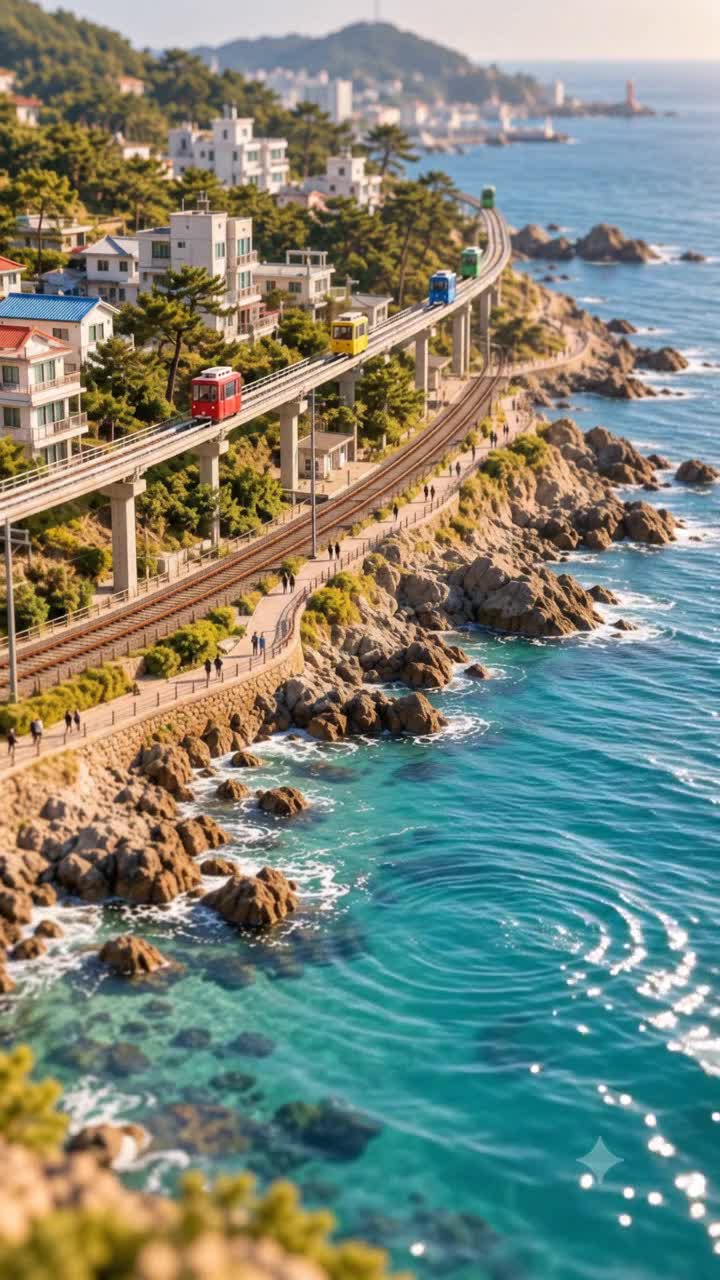
부산 미니어처 디오라마 영상으로, 부산 여행을 떠나기 전에 미리 분위기부터 느껴보는 건 어떨까요? 해안열차를 타고 지나는 구간, 노을 지는 자갈치시장의 풍경까지 손바닥만 한 미니어처 세트로 그대로 옮겨봤어요. 실제 여행지를 고르는 데 참고가 되도록, 부산의 대표 포인트들을 짧은 영상 하나에 압축해 담았습니다.
해안열차 코스
부산의 대표 포토스팟 중 하나인 해안열차는 바다를 가까이서 즐길 수 있는 구간으로 이어져 있어요. 창가 자리에 앉으면 파도가 바로 발밑까지 닿을 듯한 풍경이 펼쳐지고, 중간중간 정차하는 작은 마을들도 함께 둘러볼 수 있어요. 사실 이 열차, 원래는 실제로 다니던 동해남부선 철길이었어요. 미포에서 송정까지 이어지던 옛 노선이 폐선된 뒤, 2020년 해안 절경을 살린 관광 열차로 다시 태어난 거예요. 그래서 다른 곳에서는 보기 힘든, 기찻길과 바다가 바로 맞닿은 독특한 풍경을 즐길 수 있답니다. . 기차를 타고 떠나는 여행을 좋아하신다면 이 코스도 추천드려요: 군산 뚜벅이 여행
자갈치시장
부산 하면 빼놓을 수 없는 곳, 자갈치시장이에요. 갓 잡은 생선을 그 자리에서 손질해주는 상인분들의 손길을 구경하는 것만으로도 여행의 재미가 배가 돼요. 노을 질 때쯤 방문하면 항구와 어우러진 풍경이 특히 아름다워요. 시장 골목을 걷다 보면 활기찬 흥정 소리와 바다 내음이 뒤섞여, 부산의 생생한 일상을 가장 가까이서 느낄 수 있는 곳이기도 해요. 사진으로 남기기 좋은 포인트도 많아서, 미니어처 영상에서 본 장면을 직접 눈으로 확인해보는 재미도 쏠쏠하답니다.
집에서도 부산 맛보기
여행 전이나 후에 부산 감성을 집에서도 느끼고 싶다면, 부산 대표 간식인 어묵이 딱이에요. 뜨끈한 국물에 퐁당 담갔다가 한입 베어무는 순간, 쫄깃한 식감과 알싸하고 매콤한 맛이 확 퍼지면서 자갈치시장 포장마차에서 느꼈던 그 온기가 집에서도 고스란히 느껴져요. 쌀쌀한 날 뜨거운 국물 한 모금이 간절해질 때, 딱 생각나는 그 맛이에요. 사실 부산이 어묵으로 유명해진 데는 이유가 있어요. 6·25전쟁 때 피란민들이 부산으로 몰려들면서, 값싸고 든든한 어묵이 배고픔을 달래주는 음식으로 자리 잡았거든요. 그 중심이 바로 영도 봉래시장이었는데, 1953년 이곳에서 문을 연 작은 공장이 지금의 삼진어묵으로 이어졌어요. 그렇다고 부산 어묵이 다 똑같은 맛은 아니에요. 찬 바다 생선은 살이 탱탱해서 쫄깃한 식감을, 따뜻한 바다 생선은 부드러운 식감을 내는데, 어떤 생선을 얼마나 섞느냐에 따라 맛이 조금씩 달라지거든요. 동네마다 스타일도 제각각이라, 영도의 삼진어묵은 빵집처럼 세련된 베이커리형으로, 해운대의 고래사어묵은 밀가루나 보존료 없이 건강한 맛으로, 부평깡통시장의 미도어묵은 옛날 시장 방식 그대로 즐길 수 있답니다.
Busan has a way of pulling you in before you’ve even set foot there. This miniature diorama video bottles that magic — a coastal train hugging cliffs where the sea feels close enough to touch, and Jagalchi Fish Market glowing gold at sunset, where vendors still clean each catch by hand, just as they have for generations. It’s raw, real, and quietly beautiful — the kind of charm that makes Korea impossible to forget once you’ve seen it. And if this tiny glimpse already has you craving a taste of the real thing, Busan’s famous fish cakes (eomuk) are just a click away — the perfect bite-sized souvenir of a city that stays with you long after you’ve gone home.
Photo: Korea Tourism Organization (Korea Open Government License Type 3)
In This Guide: Why the Night Tour Feels Different Getting Tickets: What You Need to Know The Hanbok Shortcut Nobody Tells You About The Route: Where to Walk and Why Good to Know Before You Go FAQ
There’s a version of Gyeongbokgung Palace that most visitors never see — the one that only comes alive during the Gyeongbokgung Palace Night Tour. When the day-trippers head home and the golden lanterns flicker on along the ancient stone paths, this five-century-old palace transforms into something closer to a dream than a tourist attraction.
If you’re planning a trip to Seoul between September 1 and October 30, 2026, this is the one evening you shouldn’t skip.
Why the Gyeongbokgung Palace Night Tour Feels Different
By day, Gyeongbokgung draws crowds shoulder to shoulder. By night, the same palace grounds are softly lit, quieter, and strangely intimate — the kind of atmosphere that makes it easy to imagine what life here looked like centuries ago. Photographers, in particular, come specifically for this window of golden-hour-meets-lantern-light.
Photo: Seoul Tourism Organization
Getting Tickets: What You Actually Need to Know
Unlike daytime admission, the night tour requires advance online reservation through Interpark — walk-up tickets are not available unless you’re wearing hanbok (more on that below).
Booking opens: August 15, 2026, 10:00 AM KST, via Interpark Ticket
Viewing hours: 7:00 PM – 9:30 PM (last entry at 8:30 PM sharp — arrive by 8:20 PM to be safe)
Price: ₩3,000 per person (roughly $2 USD)
Max tickets per booking: 4 — but note all tickets in one booking are issued as a single group ticket, so everyone in your party must enter together
Cancellation deadline: 5:00 PM the day before your visit. After that, no cancellations and no same-day bookings.
Heads up: Popular time slots have sold out within 10 minutes in past seasons. Set an alarm for booking day.
For the latest notices (including weather-related schedule changes), check the official Royal Palaces and Tombs booking site, which also covers Changdeokgung, Deoksugung, and Changgyeonggung — useful if you’re planning a broader palace-hopping trip this autumn.
The Hanbok Shortcut Nobody Tells You About
Here’s a detail most foreign visitors miss: if you wear a hanbok (traditional Korean dress) to Gyeongbokgung during the night tour, you can enter for free, without a reservation — no ticket required.
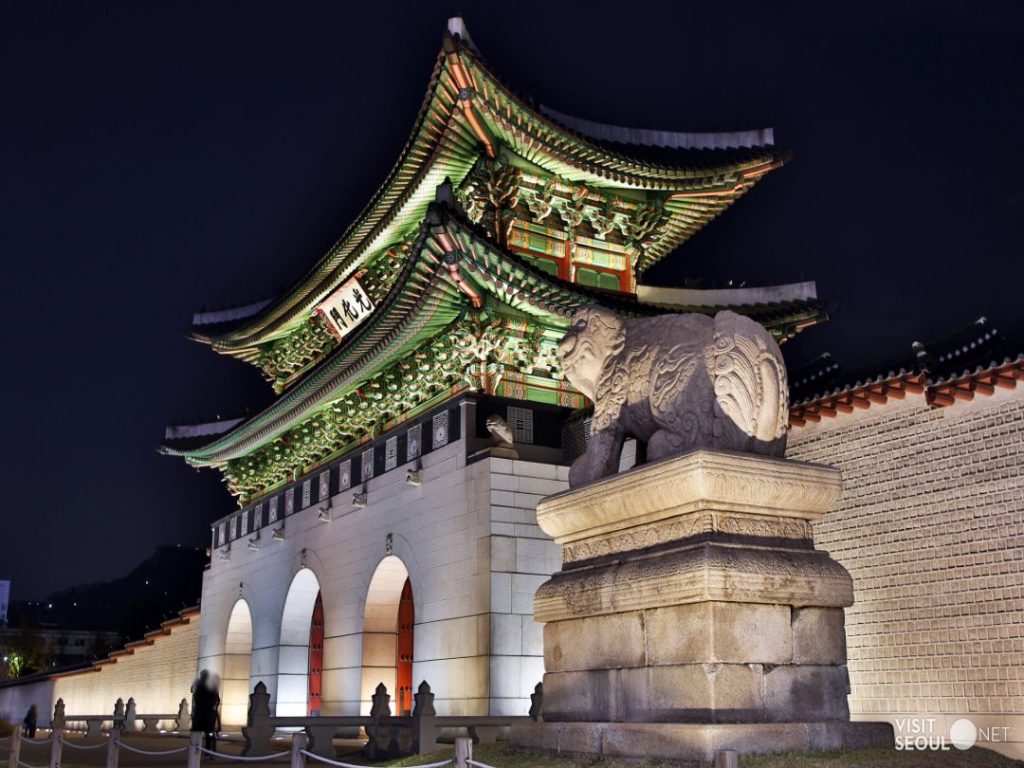
Rental shops cluster right around the Gwanghwamun Gate entrance. For a 2–3 hour rental, prices typically range from about ₩7,000–10,000 if you book ahead through platforms like Yanolja or MyRealTrip (usually covering a standard hanbok set), up to ₩20,000–35,000 for walk-in bookings or premium styles with more elaborate skirts and jackets. A basic set usually includes the hanbok itself, an underskirt, and simple hair accessories — but shoes, elaborate updo hairstyles, and men’s accessories like hats or swords are often extra (roughly ₩3,000–20,000 depending on the item). Some shops also ask for a small deposit or ID at pickup. Booking online in advance is generally the cheaper route, and worth checking the shop’s own site for exactly what’s included before you go.
Beyond the free entry, the lantern-lit palace backdrop makes for some of the most striking photos you’ll take in Korea. It’s also simply appreciated — locals tend to welcome visitors who engage with the tradition rather than just photograph it from the outside.
The Route: Where to Walk and Why
Photo: Seoul Tourism Organization
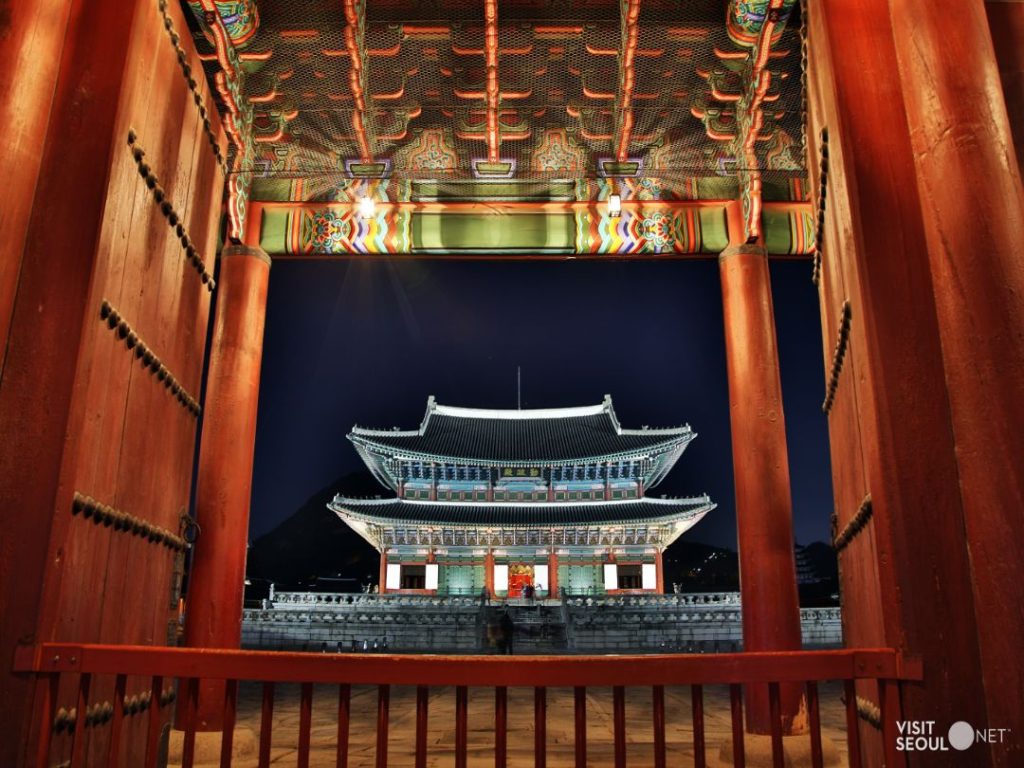
The heart of the night tour lies in tracing the path from Gwanghwamun Gate through Heungnyemun Gate, past Geunjeongjeon and Sajeongjeon, into the private quarters of Gangnyeongjeon and Gyotaejeon where the king and queen once lived, and finally into the hidden rear garden of Amisan.
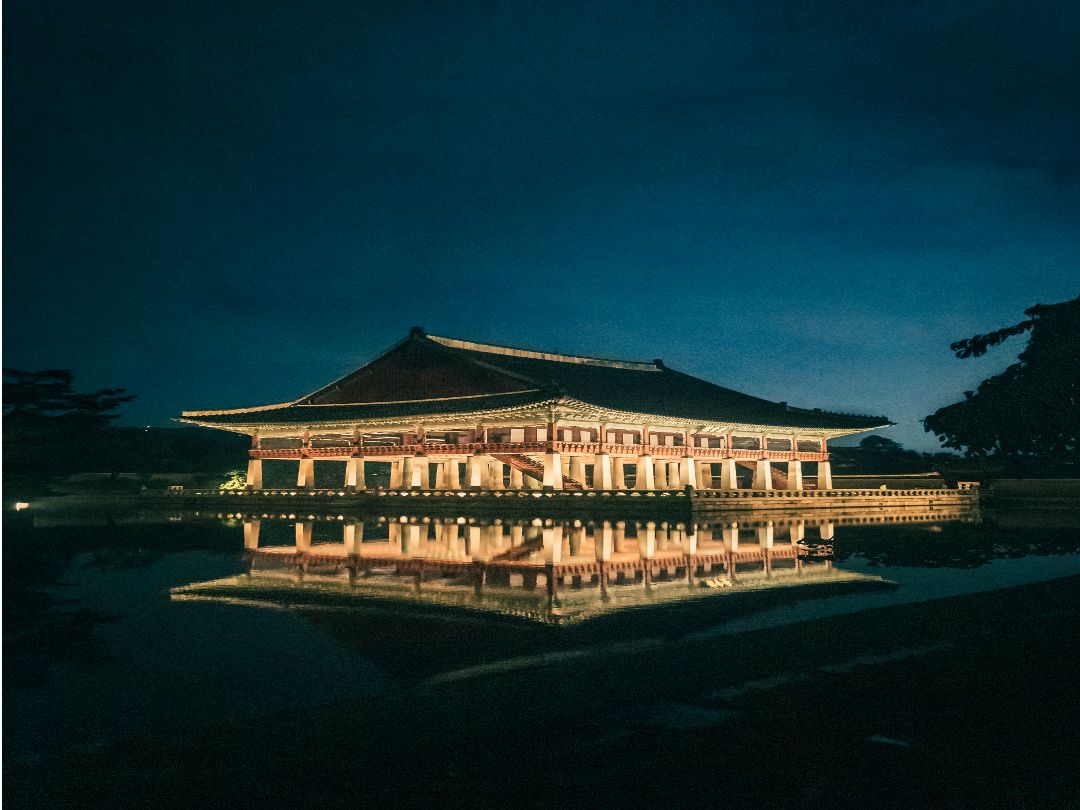
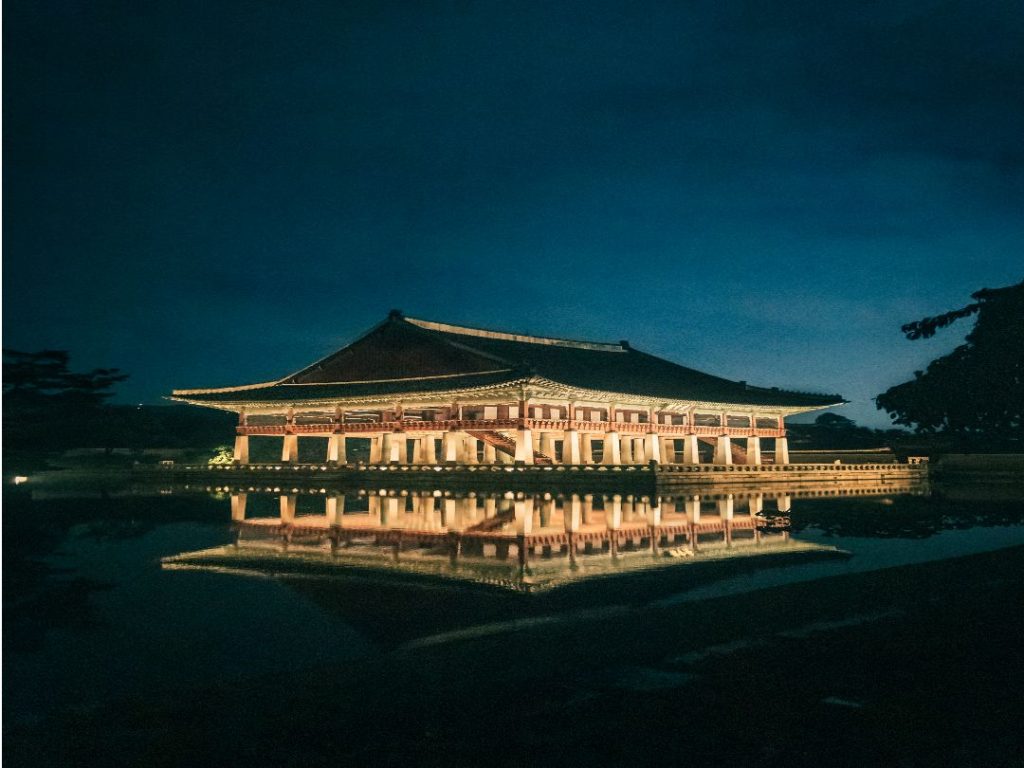
The reflection of Gyeonghoeru Pavilion shimmering on the pond, followed by the hush of Amisan’s rear garden, is the emotional high point of the walk. With only 2 hours and 30 minutes to explore, the time goes fast — many visitors say it feels shorter than expected. If you want your best photos without a crowd of strangers in frame, aim for the later part of the visit window, once the initial rush of visitors has thinned out.
Photo: Seoul Tourism Organization
Good to Know Before You Go
Photo: Seoul Tourism Organization
Crowds: Gyeonghoeru Pavilion and Amisan Garden are the most popular photo spots and get busy fast. Visit them later in your time slot for a quieter experience.
What to wear: Autumn nights inside the open palace grounds get noticeably colder than daytime — bring a light jacket, especially closer to late October. Most of the walking surface is packed dirt and traditional stone paving, so comfortable shoes are a must.
Camera gear: Tripods and large camera equipment may be restricted, since they can block the flow of foot traffic. A compact camera or smartphone is your best bet.
Photo: Seoul Tourism Organization
Bonus tip: Separately from the night tour, the Gyeongbokgung Palace Management Office runs a free special-access program inside Gyeonghoeru Pavilion and Hyangwonjeong, letting visitors climb to the pavilion’s second floor with a professional guide — an area normally closed to the public. This runs September 2 through October 30, every Wednesday and Friday, at 10:00 AM and 2:00 PM. It’s included with regular palace admission (no extra fee), but reservations are required — only 25 people per session, and the booking window opens 9 days before your target date and closes 3 days before. Book through the official Royal Palaces and Tombs integrated reservation site, under “Event Reservations > Gyeongbokgung.”
FAQ
Q: If I miss the ticket window, is there really no way in? A: There is — if you’re wearing a hanbok, you can enter for free at the gate without any reservation.
Q: Is there a quieter day to visit? A: Weekday evenings, especially Wednesday or Thursday, tend to feel calmer than weekends.
Q: What happens if it rains? A: Operating hours can change based on weather. Check the Korea Heritage Service or Gyeongbokgung’s official channels before you head out.
For ₩3,000, the Gyeongbokgung Palace Night Tour might be the most quietly beautiful night you’ll spend in Seoul. Tickets open August 15 at 10:00 AM — don’t miss it.